Reference case
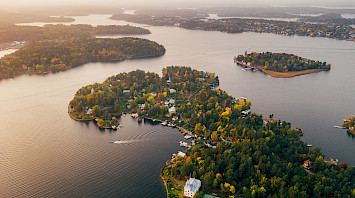
Stockholm Archipelago
A journey towards world-class experiences
This is the story of how sharp analysis, strong collaboration, and persistent strategic focus led to global recognition. The Stockholm Archipelago was named one of the world’s 25 best destinations for 2025 by National Geographic.
The Stockholm Archipelago comprises some 30,000 islands, islets, and skerries. Over recent decades, visitors have become increasingly important to the archipelago’s local economy. Tourism creates jobs in food, accommodation, services, and activities, while also improving the conditions for maintaining and developing critical infrastructure.
With a well-thought-out strategy and carefully selected target groups, there is much to gain for residents and businesses alike — particularly by increasing the destination’s overall value and by distributing visitor flows more evenly across the archipelago, year-round.
NEW VISITORS
A systematic collaboration to develop and market the archipelago as a visitor destination began in 2012. This work resulted in a strategy aimed at international markets, along with a vision: to become a sustainable, year-round destination of world-class quality by 2030.
To succeed in marketing and matching the archipelago with the right international audiences, solid decision-making data was essential. Which target groups were most aligned with realizing the vision? There was also a strong ambition to understand these audiences in depth — their motivations and interests. These insights needed to be “owned” by many stakeholders, as destination development and tourism in the Stockholm Archipelago are driven by a large number of small businesses and actors. Aligning the archipelago’s many stakeholders around a shared direction for concept development, packaging, and marketing was therefore crucial.
A FUTURE-ORIENTED ANALYSIS USING A GROUNDBREAKING METHOD
The Stockholm Archipelago has a long history of welcoming guests—initially in converted boathouses and lofts without running water when vacation travel began to take off in the 1950s, and later in partially luxurious homes with a high standard of comfort. Nature has always been at the core of the experience, but the way we engage with nature evolves as our lives and the world around us change.
In recent decades, urbanization has increased the distance between people and the natural environment worldwide. At the same time, interest in outdoor experiences during leisure time appears to be intensifying — perhaps because of, rather than despite, this development. Still, it is not possible to treat all nature-oriented travelers as a single group.
In 2019, Kairos Future conducted an analysis for Stockholm Archipelago that explored the future of international “outdoor tribes” — interest-defined target groups united by a longing for nature, but with differing preferences regarding adventure, services, and comfort. Specifically, Kairos Future examined the following questions related to the future of outdoor experiences:
- Where are outdoor experiences heading? What trends can be identified?
- Who is the new outdoor traveler? What different “tribes” exist, and what are their desires, motivations, and expectations?
- What are the implications for product development, innovation, strategy, and marketing for outdoor businesses and destinations?
The first part of the study was based on an exploration of publicly available sources, including market research reports, media coverage, and academic articles, to provide background, context, and a historical perspective. The second part of the study was based on netnography.
Netnography is similar to ethnography—the systematic study of cultures from the participants’ own point of view — except that it focuses on people’s lives online. The core objective is the same: to understand what real people actually do and say about a specific topic, without predefined hypotheses. This approach makes it possible to identify patterns that might otherwise be missed.
Kairos Future used proprietary algorithms in its internally developed, at the time groundbreaking, AI-based analysis platform Dcipher to cast a wide net, dig deep into the data, and visualize the results in a compelling way.
Unlike traditional ethnography, netnography allows researchers to explore many more topics and vastly larger populations. Where time or budget constraints once limited sample sizes, new algorithms made it possible to analyze hundreds of thousands of internet users simultaneously. The result provided Stockholm Archipelago with a rich and multifaceted foundation for deep exploration.
RALLYING AROUND A TARGET GROUP, FOCUSING ON THEIR NEEDS
From the outset, it was clear that the nature-seeking visitor was the right focus for the archipelago. Yet major differences exist between those seeking adventure and those seeking tranquility—between visitors who find manicured park landscapes sufficiently stimulating and those who thrive in remote wilderness areas like Sarek.
The extensive analytical material enabled deep dives into these different “tribes,” their ideas, preferences, and attitudes toward nature experiences themselves as well as desired complementary activities. Models, visual summaries, and quotations that brought the statistics to life made the underlying motivations easier to understand.

Kairos Future (2019): Future of Outdoor
SUSTAINED FOCUS ON THE GOAL—WORLD-CLASS NATURE EXPERIENCES
Stockholm Archipelago concluded that while kayaking in strong winds outside Möja might get the adrenaline pumping, the strongest match between supply and demand lay in more relaxed nature experiences. Significant time and effort were invested to ensure that everyone involved truly understood the “DNA” of the selected target groups.
Over the years, partners in the initiative have focused on sustainable product and business development aimed at the chosen audience, working in close collaboration with the tourism industry while integrating the interests and needs of local communities into a coherent destination. Through sustained marketing efforts, the focus has remained on the selected “nature tribe,” regardless of geographic market, while also consistently addressing long-term issues critical to the archipelago’s visitor economy.
In November 2024, a major milestone was reached—a clear validation of the long-term and persistent effort. The Stockholm Archipelago Trail was inaugurated: a 270-kilometer hiking trail connecting several islands between Arholma and Landsort. The trail has gained international attention, including from National Geographic, which named the Stockholm Archipelago one of the world’s 25 best destinations for 2025.
“Simply being recognized by National Geographic is an achievement that does not happen by chance — it is the result of years of dedicated and professional collaboration among businesses and destination promoters working toward a shared goal. The value of international visibility should not be underestimated. I am incredibly proud that Kairos Future has been able to contribute to part of this journey and help lay the foundation for a sharp strategy,”
Johanna Danielsson, Senior Advisor and Futures Strategist at Kairos Future.
“Kairos Future’s analytical and strategic support laid the foundation for outstanding place development—we found the right match between market needs and our 30,000 islands! Together, these two factors were decisive for the successful strategic work we have remained committed to ever since. The analysis was clear, accessible, and incisive, guiding us toward the recognition we later received from National Geographic and others. We have gone from being an internationally unknown destination to multiplying the number of international visitors. It feels fantastic to have succeeded in putting Stockholm Archipelago on the global map as a world-class destination,”
Marie Östblom, Project Manager for Stockholm Archipelago.
“Clear analyses and strategies help us develop our assets—land, water, and buildings — in line with the needs of our target groups. With these as a foundation, we can work together with our entrepreneurs to develop our resources into the international, national, and regional arena for experiences that visitors are looking for. This, in turn, allows us to fulfill our statutory mission of preserving and making the archipelago accessible for current and future generations,”
Ulrika Palmblad-Wennergren, Director of Development at the Archipelago Foundation.
Would you like to learn more about this case, or about how to work with future-driven strategy development yourself? Contact Johanna Danielsson
Some of our Best Cases
-
Stockholm Archipelago
A journey towards world-class experiences
-
Consumer Compass 2024
Why we eat (and don't eat) vegetables, fruit and berries

-
Thought Leadership Report with CEI
Thought leadership about the future of circular electronics from a strategic foresight perspective

-
Interest-based Target Group Analysis
Insights on the target group with Granngården
-
Systematic business intelligence
Systematic business environment analysis to strengthen the competitiveness of Swedish industry

-
Where will our food come from in 2035?
Tillväxtverket and Kairos Future in foresight project

-
Analysis-driven Site Development
Katrineholm: Shared understanding of local conditions and opportunities
-
Chinese Startup Landscape
China Startup Dashboard

-
Foresight-driven Strategic Competitiveness
Strategic Foresight Process

-
Innovation Process with ATG
An innovation management system to ensure competitiveness.

-
Society Building 2030
A report about society building then, now and in the future, in collaboration with Sobona.
-
Nordic Food Experiences
A strategy project over five time zones
-
Meet the Sustainable Consumer
The sustainable consumer with Region Västra Götaland and Science Park Borås.
-
Wind Tunnel Test of the Communications Strategy
Halland sharpens its communications strategy – and secures its future

-
Target Group Analysis Project with an American University
What does the next-generation of students value?

-
AI-based methods for railways
AI-based methods for predictive maintenance of railways.

-
Mapping the concentration of healthcare
Project for increased accessibility and quality in healthcare with Västra Götalandsregionen.

-
Planning and management with Norrenergi
Planning and management of the strategic development plan process.

-
Premium Consumer Goods Brand
Big Data Analysis to understand the competitive position in the Chinese consumer landscape.

-
Tourism in Skåne
Thinking long-term in a rapidly changing world – a challenge for many destinations.
-
Ministry of Mining in Chile
Scenario planning for the mining industry in Chile with Ministry of Mining in Chile, CORFO and SONAMI

-
European Travel Commission
Tracking multi-destination travelers with AI

-
Parks and Resorts
From theme parks to experience professionals – how Parks and Resorts became thought leaders

-
Visit Norway
Is sustainability worth paying for?

-
The 10,000 year old leans on history for future projects
Evaluation of the High Coast’s destination development
-
Skill and competence needs by 2030
When humans face machines in the hotel and restaurant sector

-
European Travel Commission
EU–China tourism year

-
Wonderful Copenhagen
The end of tourism as we know it

-
Transport Analysis
Strategy towards 2040

-
Swedavia
Analysis of the airport of the future for Swedavia

-
Ridderheims & Falbygdens
Thought leader positioning with Ridderheims & Falbygdens

-
Spaceport Sweden
Process management for the national strategy “Destination Space”

-
Kinnarps
Trend report about the world of work – how we work, learn and meet – for Kinnarps.

-
Manpower Work Life
Strengthening the expert role within the labour market

-
Leading Hotel Chain
Trend driven innovation for leading hotel chain
-
The National Swedish Media Council
Future-driven strategy development for the Media council

-
Peab
Future-driven strategy and business development for Peab.

-
Swedish Forest Society Foundation
Scenario analysis for Habitat Banking 2030

-
Kinnarps World Café
Facilitating interactive workshops with new technology

-
Innventia
Global Outlook Report for Innventia – a world-leading research institute.

-
Kraft Foods
Systematic trend and idea management (TRIM) for KRAFT Foods.

-
Danish Centre for Architecture
Green transition for Danish Cities – a scenario project for Danish Centre for Architecture

-
Höganäs Municipality
Analysis for Höganäs Municipality.

-
WWF
Scenario analysis process for WWF.
-
UNWTO & ETC
Netnographic study of Chinese outbound travellers for international tourism organizations
-
Tieto
Exploring the future of business transformation for a technology company

-
The Region of Halland
Analysis towards 2020 for the Region of Halland.
-
Leading Manufacturing Company
Understanding electro mobility in China from an innovation and policy perspective.

-
World Association of Newspapers (WAN)
Scenarios on the future of newspapers for the World Association of Newspapers.

-
Leading Niche Beverage Producer
ConsumerWatch for a leading beverage brand

-
Folktandvården Västra Götaland
Business development for Folktandvården Västra Götaland (Public Dental Service)

-
Leading Personal Health Brand
Online brand equity monitoring and strategic advice

-
Husqvarna Group
Global Garden Report for Husqvarna Group.

-
The Swedish Police Union
Analysis of future scenarios for The Swedish Police Union

-
FAR
A thought leadership report on the future of accounting and auditing for the FAR association.

-
Leading truck manufacturer
Mapping opportunities in electromobility in China for leading truck manufacturer

-
ViS, Education for Adults
Analysis of future scenarios regarding education for adults for ViS.

-
The Swedish District Heating Association
Future scenarios, goals and strategy for a trade organization

-
World Leading Food Producer
Trend analysis and brand development for world leading food producer

-
SABO
Big Data Analysis for SABO – the Swedish Association of Public Housing Companies.

-
SCR and SLAO
Report on the outdoor experience of the future with SCR and SLAO.
-
The high school "Staffansgymnasiet"
Trend-driven strategy development for Staffangymnasiet in Söderhamn

-
International Food Producer
Developing innovation platforms for an international food producer